
🧩 What Does a Timing Chain Do?
Your car’s timing chain is like a conductor in an engine orchestra. It keeps all the moving parts working together at the right time.
Specifically, the timing chain connects the crankshaft (which controls the pistons) to the camshaft (which controls the valves). As the crankshaft spins, the timing chain turns the camshaft so that the valves open and close at the exact right moment. This makes sure the engine runs smoothly and efficiently.
If the timing chain slips, stretches, or breaks, the engine’s timing goes off—which can cause poor performance or even serious damage.
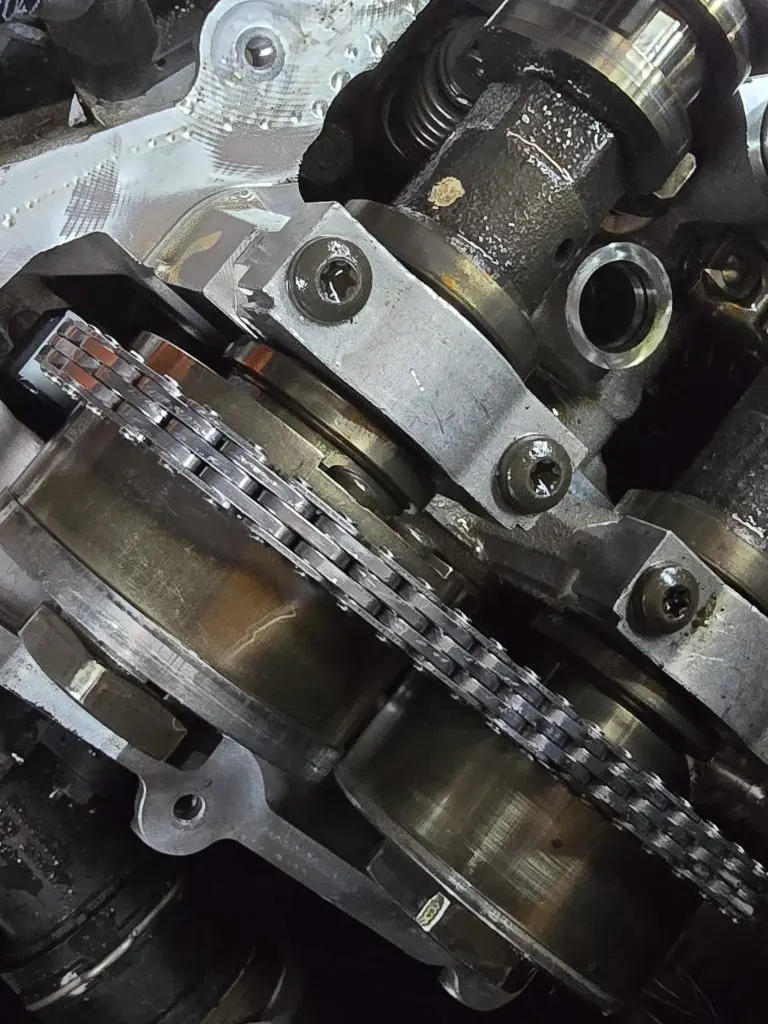
Common Symptoms of Timing Chain or Belt Problems:
- Engine Misfires or Runs Rough
If the timing is off, the valves and pistons don’t work together correctly, causing the engine to stumble, shake, or misfire. - Rattling Noise at Startup or While Driving
A loose or stretched timing chain often makes a metal-on-metal rattling sound, especially when the engine is cold. - Check Engine Light
Your car’s computer can detect timing problems and turn on the check engine light—often with codes related to misfires or cam/crankshaft sensors. - Poor Acceleration or Loss of Power
Bad timing means the engine can’t produce power efficiently, so you may notice sluggish response when pressing the gas.
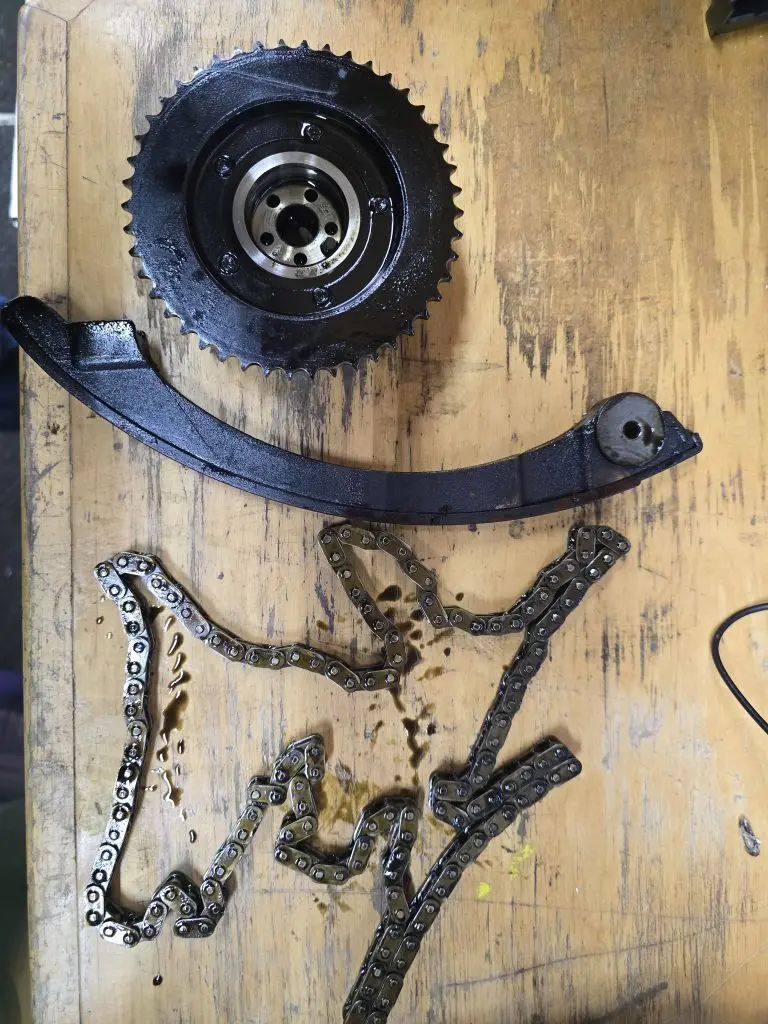
Noticing rattling, misfires, or a check engine light? These could be signs of a failing timing chain. Don’t wait until it turns into a major engine repair.
📞 Call Priebe’s Auto Clinic at 405-523-2172
🌐 Or schedule service anytime at pacokc.com
We’ll get your engine back in sync—fast and professionally.