

🔊 Squealing, Grinding, or Rattling? Decoding Your Car AC Noises
In the middle of an Oklahoma City summer, your car’s air conditioning is your sanctuary. But if that sanctuary starts making a loud squeal, a metallic grind, or a rhythmic rattle the moment you hit the “ON” button, your AC system is sounding the alarm.
Ignoring a noisy AC isn’t just an annoyance; it’s a gamble. In 2026, a seized AC compressor can snap your serpentine belt, leaving you stranded without power steering or an alternator. At Priebe’s Auto Clinic, we use Digital Inspections to hear what your car is saying before a small noise turns into a $2,000 catastrophe.
What is Your AC Noise Trying to Tell You?
1. The High-Pitched Squeal (The Belt or Pulley)
If your car lets out a sharp screech when the AC kicks in, the culprit is usually the serpentine belt or a worn-out pulley. The AC compressor puts a sudden load on the belt; if the belt is glazed, cracked, or the tensioner is weak, it will slip and scream. Catching this early usually means a simple belt replacement rather than a full system overhaul.
2. The Metallic Grinding (The “Death Rattle”)
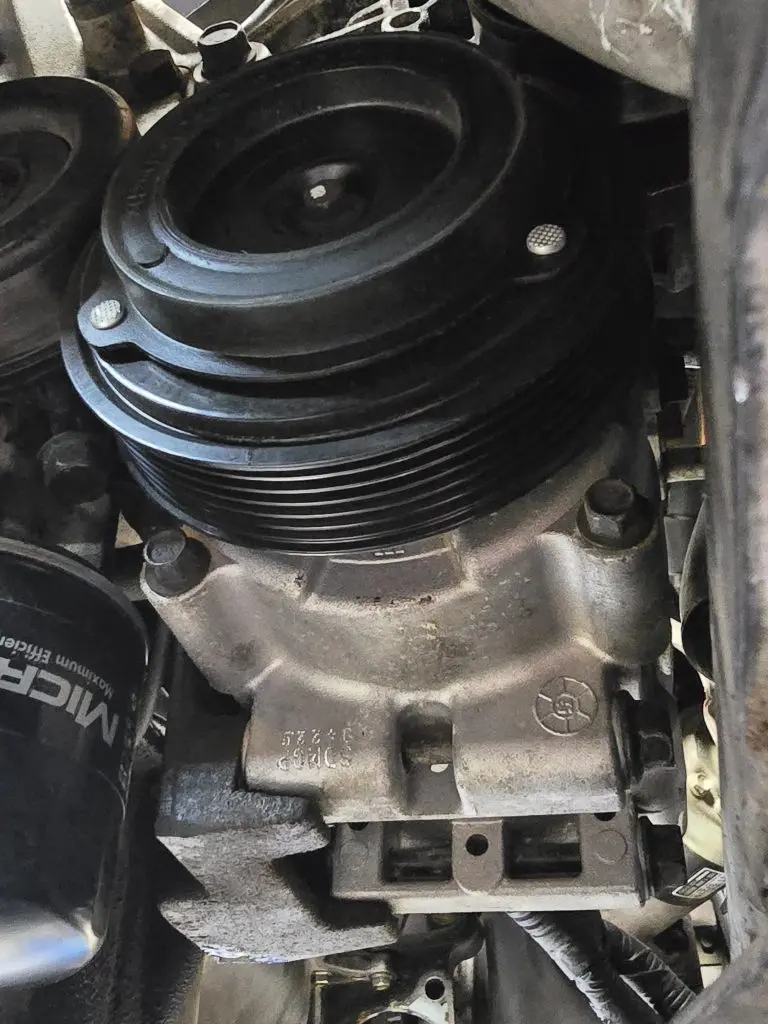
A grinding or growling sound is the most serious warning. This often points to internal bearing failure or worn pistons inside the compressor. It’s essentially “metal-on-metal” contact. If you hear this, turn the AC off immediately. If the compressor “grenades” internally, it sends metal shards through your entire system—meaning you’ll have to replace the condenser, evaporator, and lines, not just the compressor. Here is a photo of an AC Compressor being replaced. The old one was rattling every time the AC Kicked On.
3. The Sudden “Clunk” or Rattling (The Clutch or Mounts)
The AC clutch is a magnetic plate that snaps onto the pulley to start the cooling process. If you hear a loud clunk followed by a rattle, the clutch assembly may be failing or a mounting bolt may have vibrated loose on OKC’s bumpy roads. Sometimes, a rattle is simply debris (like a stray leaf) stuck in your blower motor fan, but it always warrants a check.
4. The Persistent Hissing (The Leak)
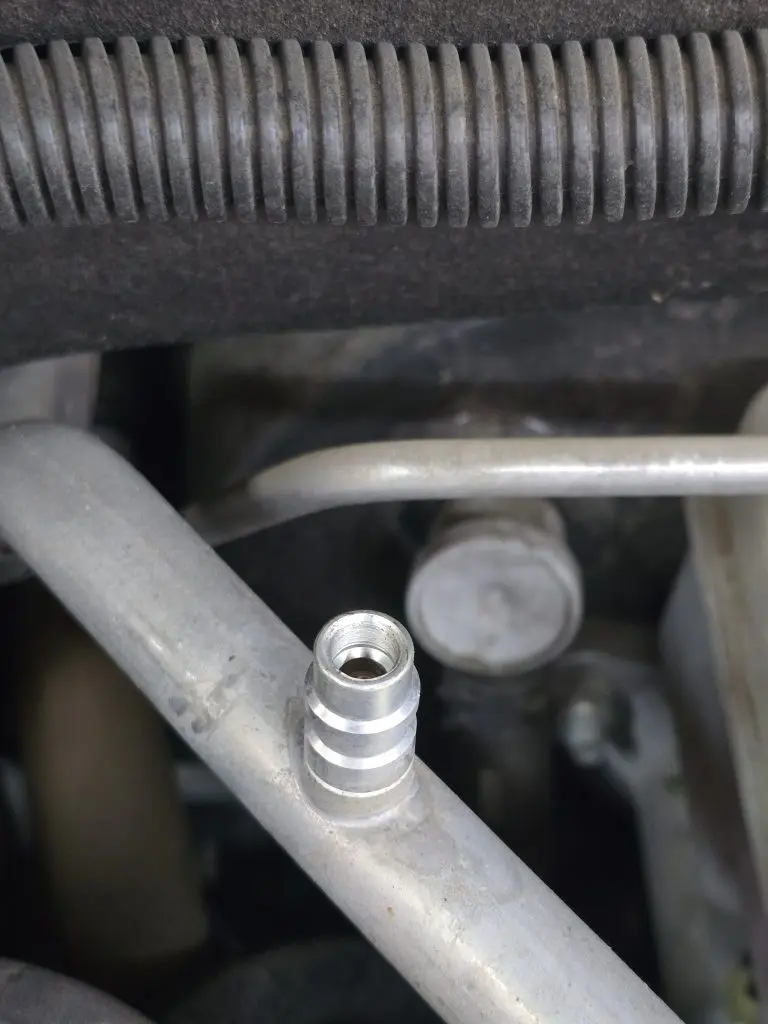
A hissing sound—especially one that continues for a few seconds after you turn the engine off—often indicates refrigerant gas escaping under high pressure. This means you have a leak in a hose, a seal, or the expansion valve. AC Service Valves are one of the most common leaks that we see in Car AC Systems. This is a valve similar to the ones that you use to air up a tire.
How Priebe’s Digital Inspections Save You Money
In 2026, you shouldn’t have to take a mechanic’s word for it. At Priebe’s Auto Clinic, we provide a Digital AC Health Report sent directly to your smartphone.
- We Record the Sound: Our technicians can record the specific frequency of the noise to pinpoint if it’s a belt or an internal bearing.
- We Show You the Wear: We’ll send you high-res photos of your frayed belt, leaking compressor seals, or contaminated fluid.
- Precision Diagnostics: We check the “heartbeat” of your system—the pressures and temperatures—to see if a simple 1234yf recharge or a clutch repair can solve the issue without replacing the entire compressor.
Don’t let a small rattle become a total system meltdown. 📍 4014 N Barnes Ave, Oklahoma City, OK 📞 (405) 523-2172 | PACOKC.COM